
Annual Student Art Show in Langley: PERCEPTION 2026

Updated: Jun 9
Thank you to those who attended our PERCEPTION Art Show and Annual Student Art Show in our Langley Studio! This celebratory evening could not have happened without your support—families, friends, educators, and community leaders—this is our heartfelt thank you!
In this showcase, we featured our studio’s projects from our 2025-2026 curriculum which focused on the theme of “Perception”, whether that be multicultural differences in perspectives, how colour makes us feel, or even how shape and textures serve as another language and shine a light in other worlds. With this theme, we invited students to explore their own memories, different worldviews, and personal interests through technical skill and creativity. We invite you to read further to learn more about the scope and background of each project!
Student Art Project 1: Reverspective
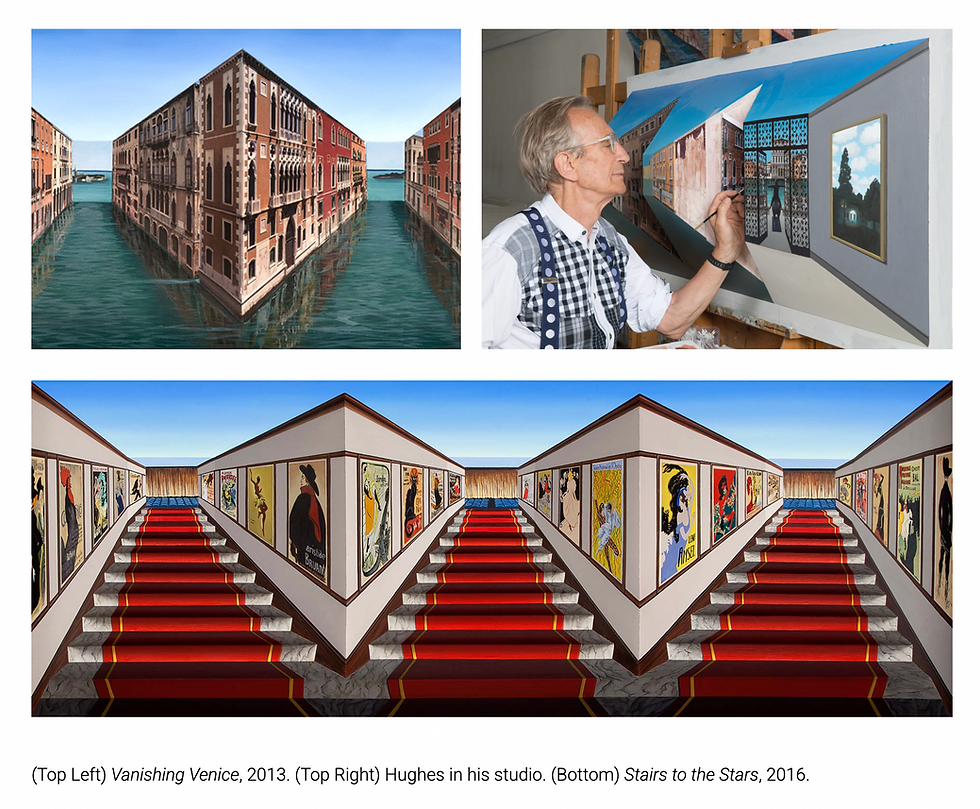
When you look at this series of works, you may be walking from side to side, approaching the three-dimensional artworks with curiosity and stepping back slowly to observe the reverspective effect at play. Reverspective, created by British artist Patrick Hughes, describes an optical illusion on a three-dimensional surface where the parts of the picture which seem farthest away are actually physically the nearest to a viewer. In the late 1980s, Hughes sought to challenge the difference between perspective and reverse perspective, thus making space, frozen yet mobile. In the Reverspective project, students had the opportunity to expand their imaginative capabilities and visualize spaces that invite viewers to have one foot in the fictional world and the other in our current reality.

Student Art Project 2: Dualities
As any artist will learn throughout life, an artwork is built up by multiple layers of pigments or pixels that can reveal hidden stories, alternate perspectives, and whole new worlds. When thinking about these ideas, the striking work of German fine artist, David Ambarzumjan, comes to mind. In the Dualities project, students investigated contrasting pairs that already exist in reality to create a piece inspired by Ambarzumjan’s practice which juxtaposes what is and what may be.
Some contrasting pairs include, but are not limited to:
Day and night
Past and future
Urban and rural
Black/white and colour
Earth and space
Ice and fire
Life and death
Exploring how colour influences emotional response through juxtaposition, cultural context, and multiple interpretations, the resulting student works investigate a myriad of human, non-human, and post-human experiences, such as a peaceful moment in a meadow to a future world where humans live underwater. As you take your time scanning all the students’ works, we invite you to reflect on your relationship with time and space.


Student Art Project 3: Reflections (or self-portrait)
Reflections represents a body of work that explores the students’ everyday lives and their self-perception. Inspired by Norman Rockwell’s Triple Self-Portrait, the Reflections project allowed students to explore the concept of the traditional self-portrait through different perspectives and reflections. Rockwell was an American painter and illustrator who was part of the Golden Illustration Era and best known for painting American life and figures in a realistic style, such as Freedom From Want. His artworks influenced popular culture in the mid to late 20th century.
Learning to draw and paint through observation using a mirror is no easy feat; it requires deep focus and keen observational skills, and our students delivered! The self-portrait is not just a reflection of the maker, but also a representation of the current world and what flows in and out of a person’s lived experiences.


Student Art Project 4: Macro Textures

Many of the patterns that we find in our everyday lives, such as honeycomb or scallop, are from textures that exist at a micro level–what the human eye cannot see without the aid of a microscope. What does it mean to closely observe and draw these micro textures at a larger scale?
For the Macro Textures project, Students closely analyzed the details in close-up images of eyes, both animal and human, and/or other parts of living beings, such as scales on fishes and butterflies, the texture of human skin, and more.
Do you notice any patterns when we look at these macro textures? Do they look like other things or beings that exist in our environment? The Macro Textures project asks students and audience members alike to reflect on the ways we are all interconnected.
Browse the Annual Student Art Show in our Langley Studio!
Did you miss our Annual Student Art Show in Langley? Don’t fret! Here are some snapshots of the gallery space before we opened our doors.
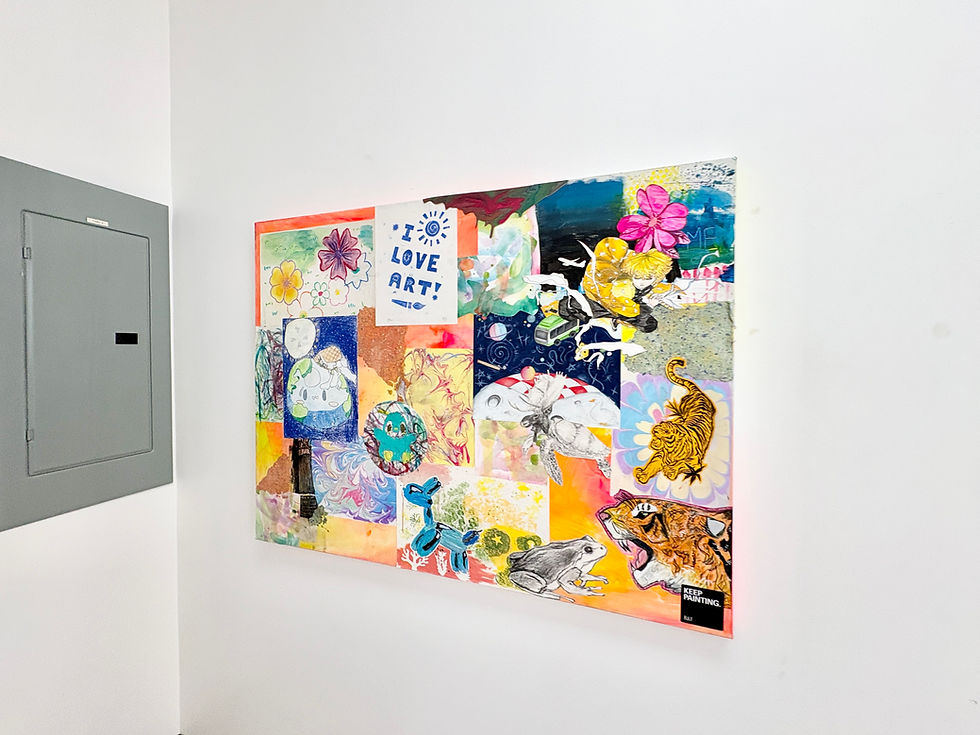
We always look forward to seeing the different ways our students’ works decorate the Art Village classrooms each time. This year, we had a “Sign the Guestbook (with your face!)” activity and a collaborative table drawing station in our second classroom. Instructor Jenny also created a collage (scroll to the bottom) which commemorates some works from past and present students. See anything you know? 👀


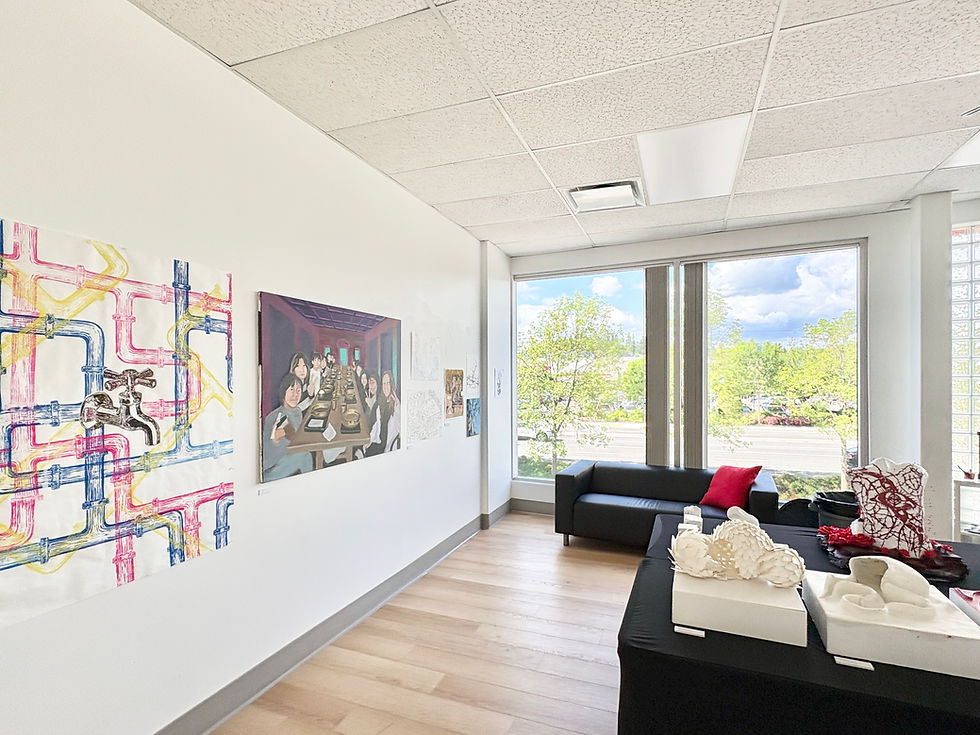

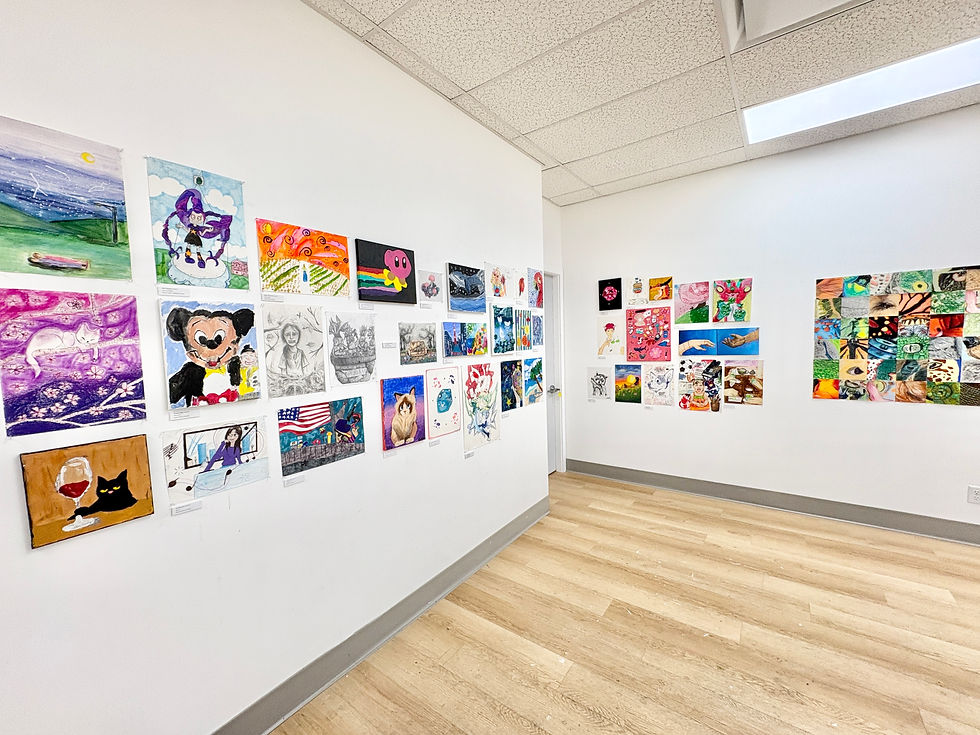


Thank you all so much for coming to support our students. We met friends of friends, family friends, and also other teachers. What a great evening of art, fun, and celebration! 🥳 Let us know your favourite moments in the comments section below! Once again, congratulations to all our students! Catch you at next year’s exhibition! Perhaps the theme will be something more historical and timely?

Comments